Blog
Podcast
How named accounts and orchestration unlock enterprise revenue
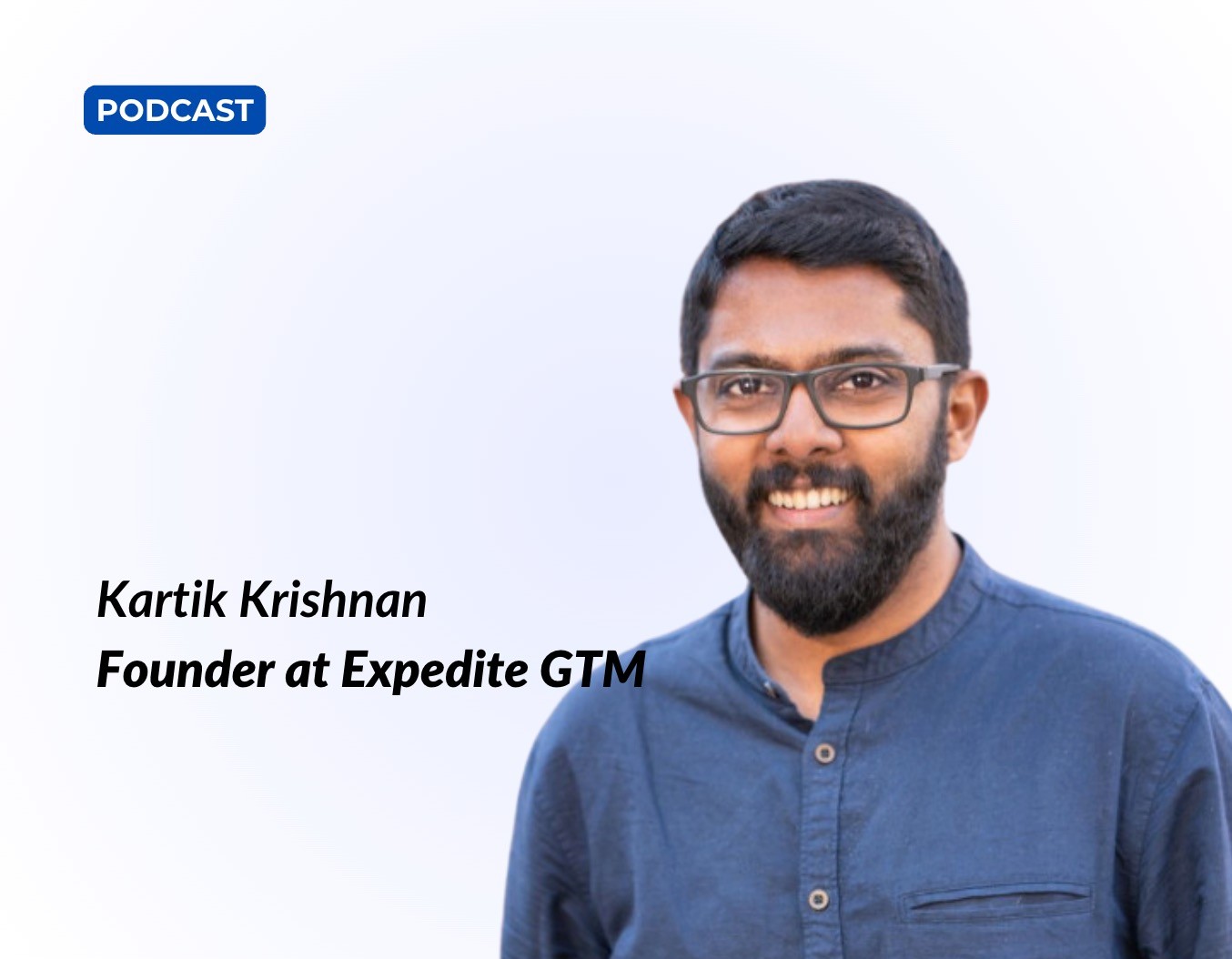
Kartik Krishnan explains how to pick named accounts, validate messaging, and align marketing and sales through events, content, and disciplined deal execution.

Hitesh Kapadia
CRO and Co-Founder
Feb 24, 2026
Kartik Krishnan has worked across sales and marketing, from selling Google Ads to running enterprise marketing at Onfido and Beamery. In this episode, he breaks down why enterprise growth comes from focus, not volume, and how teams can align around the right accounts with the right message. His approach starts with “right to win” thinking, then builds coordinated moves across sales and marketing that create real deal momentum.
How a paid media background evolves into enterprise GTM discipline
Kartik started his career selling Google Ads, then expanded into digital marketing across paid social and SEO. As he moved deeper into B2B, he realised paid ads alone were not going to “move the needle” for enterprise deals, especially when the goal is large, high-consideration buying committees. That shift pushed him toward CRM, pipeline thinking, and the mechanics of moving from lead to contact to deal.
At Onfido, he saw the value of structured revenue process firsthand, including learning from frameworks like Predictable Revenue. Later at Beemery, the lesson sharpened: you do not need hundreds of customers in enterprise, you need the right companies at the right moment, with active transformation projects and clear internal momentum.
Why named accounts should start from “right to win”
Kartik’s consulting work centres on building a named account list and focusing tightly on ICP. Instead of “spray and pray,” he works backward from where the business has the highest right to win, using revenue leaders to guide prioritisation and then translating that into campaigns that target those same accounts. The aim is not more top-of-funnel, it is the right top-of-funnel.
He also makes room for new accounts, but only with a clear justification and hypothesis.
"I need to do the med pic almost, pre-med pick, if you will."
How to build the account list using top-down and bottom-up inputs
Kartik combines two perspectives to create a more realistic target list. Top-down input comes from revenue leadership, including segments and industries that have already worked and where the company believes it can win. Bottom-up input comes from sellers, including where they are already selling, what is working in the field, and where they are currently focused for a reason.
He then pressure-tests these inputs against long-term revenue potential, leaning toward accounts that can become sticky, strategic wins. He notes that sellers can sometimes chase shorter-term wins, while his job is to keep the team anchored to longer-term outcomes that are worth the effort.
How to validate your hypothesis with clear leading and lagging signals
Kartik’s view is practical: when you go after a targeted list with a hypothesis, silence is still a signal. A clear “no” helps you quickly decide whether the account selection or the messaging needs to change, and that clarity has real value in enterprise GTM. Early engagement matters, but it needs to ladder into outcomes.
Leading indicators he looks for include:
Engagement and interest from the account
Willingness to attend an event or roundtable
Willingness to speak with founders or senior leaders
Signs that stakeholders are opening up about real pain points and objections
Lagging indicators come later, including:
Pipeline creation
ACV increases
Improved deal velocity
Closed-won deals
He also highlights the intelligence you can gain from existing customers, especially expansion signals like moving from “10 seats to 15.” Those moments can reveal patterns to apply to the target list, and they can feed testimonials and account messaging.
How marketing can multi-thread deals through events and intentional orchestration
Kartik sees events as a major lever for multi-threading, especially roundtables that help you move from one or two contacts to a broader buying committee. The goal is to invite relevant stakeholders, including a champion’s boss, into valuable conversations where they reveal priorities, constraints, and what it will take to move forward. He frames this as “orchestrating” the motion across touchpoints, with marketing creating air cover while sales pilots the deal.
"My word of 2026 is being intentional about it."
He also warns that marketing operates on longer cycles, so teams need strong feedback loops as deals evolve. A 30-day window to an event can change the deal shape completely, so the plan must adapt without forcing marketing to rebuild everything overnight.
How to use content to personalise by region and increase credibility
Kartik shared an example of producing a global report on the construction industry, then extracting region-specific insights to make it feel relevant to local stakeholders. Instead of sending one generic asset, he turns the report into different slide narratives based on what matters in each territory, such as retirement-driven workforce gaps in one region versus a younger workforce pipeline in another. This type of light but meaningful personalisation can increase credibility because it shows you have done work to make the message fit their world.
How to reduce attribution fights by aligning around the same strategic accounts
Kartik is blunt about attribution debates: he dislikes splitting “marketing-attributed” versus “sales-attributed” outcomes, even if he understands why teams do it. He believes the better solution is a combined GTM motion where sales and marketing deliver one cohesive message into the same strategic accounts. When both teams want to win the same big, strategic accounts, the alignment becomes more natural because everyone benefits from the outcomes: big deals for sales and flagship customers for marketing.
He describes the objective as creating a win-win scenario that feels natural to execute, rather than separate wins for each function. Winning the right accounts reduces pressure and makes collaboration easier because the work is clearly connected to meaningful, sticky revenue.
In the closing question, Kartik said that if he had to pick one channel forever for outbound, he would choose LinkedIn, combining organic posting and thoughtful engagement with direct outreach that builds on visible value. He also left a question for future guests: share the most successful thing a marketer has done to enable landing a big deal.
Hitesh Kapadia
CRO and Co-Founder
Share